RealGM Wiretap
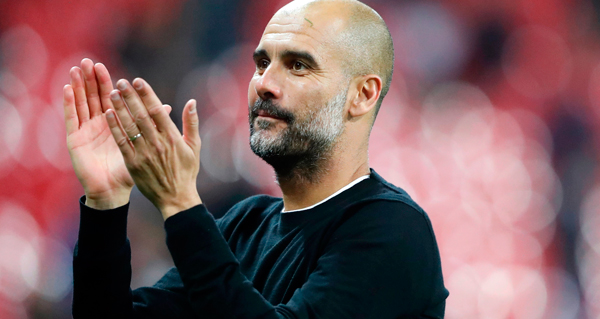
Pep Guardiola's tactical approach at Manchester City in 2026 bears striking similarities to ideas he outlined two decades earlier while analyzing Spain's 3-1 victory over Tunisia at the 2006 World Cup. The Manchester City manager's evolving system reflects principles he articulated in a column for Spanish newspaper El Pais that year.
City's attack has transformed dramatically since 2017-18, when Leroy Sane and Raheem Sterling played as wide wingers. Nearly a decade later, Guardiola deploys narrow, fluid attackers who resemble the "position-less" forwards he praised in Spain's side under Luis Aragones.
"When you decide to play on the counter-attack, you have plenty of space. When you decide to attack [with the ball], you have less," Guardiola wrote in 2006. "When you play on the counter-attack, the ball belongs to the opponent."
City initially leaned into counter-attacking this season, scoring more goals from fast breaks by November than in the previous two league campaigns combined. Recently, however, Guardiola has shifted toward possession-based build-up against increasingly compact Premier League defenses.
His recent 3-0 victory over Fulham showcased the tactical parallel. City used split strikers Antoine Semenyo and Erling Haaland with Phil Foden behind them, flanked by high full-backs and protected by a single pivot in Rodri. The shape mirrored Spain's 2006 formation featuring Xavi, Marcos Senna, and Xabi Alonso.
"If [the attackers] drop in too early, it creates a space problem, forcing Xavi, Senna, and Cesc [Fabregas] back," Guardiola wrote in 2006, describing timing as crucial.
That same principle applies to City now. Narrow attackers pin opponents deep, creating space for Rodri and City's defenders to build from the back while opening wide areas for full-backs Matheus Nunes and Rayan Ait-Nouri.
"We adapt to the quality of the players that we have," Guardiola said recently. "We have just one proper proper winger right now in Antoine and we adapt the system to make comfortable the players."
Despite reinventing his teams throughout his career, Guardiola's core beliefs about unlocking defensive blocks through possession and spatial manipulation remain unchanged from 2006.