RealGM Analysis

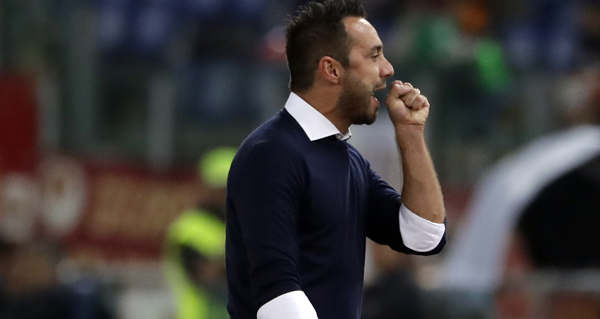
The tactics board became a symbol of the end of Wilfried Nancy’s time at Celtic before it had barely begun. Down 2-1 in his debut as manager against league leaders Hearts last December, Nancy was seen using the board to reconfigure his lineup mid-match. The image clashed with the x-factor cool we want to associate with managers who can change the fortunes of their side with a raised eyebrow while also confirming fears of a former MLS manager overwhelmed by European football. After winning just two out of his first eight matches, Nancy was sacked after 33 days. He became the shortest-serving manager in the club’s history. Celtic players reportedly passed judgement on the 48-year-old “straight away.” Worse still, in the social media age, Nancy became a meme.
If there was one MLS manager ready for Europe, it was Nancy with his innovative, possession-based style. Replacing Thierry Henry in Montreal in 2021, he led the club to a third-place finish, their highest ever in MLS. Montreal surprisingly allowed him to leave for Columbus in 2022, where he won an MLS Cup in his first season.
But it was the manner in which he won. In a league largely defined by the pragmatic nature of the 4-2-3-1 formation, Nancy unveiled a lopsided 3-4-3 formation with attacking wingbacks. His sides were comfortable playing in tight spaces, taking risks in possession, and stretching opponents from side to side. He spoke of using the ball to “create emotions.” His ideas were a combination between the intensity of boxing and the strategy of chess.
“As a defender, you’re instinctively taught, how fast can I move the ball forward? Whereas here, it’s like, how long can you wait, until a striker steps on your toe, before you pass the ball,” recalled current Celtic rightback Alistair Johnston on working with Nancy at Montreal.
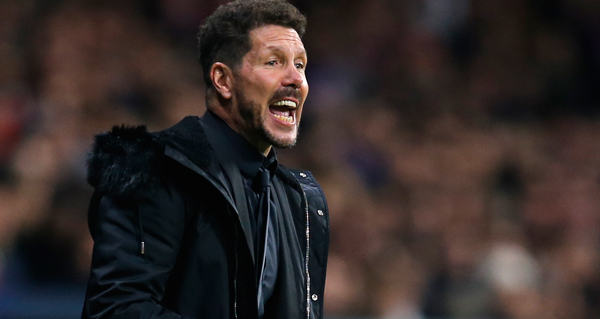
With Nancy as the attacking innovator, former Minnesota United manager Eric Ramsay represented the infusion of youthful, cutting-edge ideas at West Brom upon his arrival into the Championship club in mid-January. The 34-year-old was the youngest MLS manager in league history when hired in 2024, having built his reputation under Ole Gunnar Solskjaer and Ralf Rangnick as a first-team coach with Manchester United. He was a thoroughly modern manager with his emphasis on set pieces and finding incremental advantages. At one point during his tenure, Minnesota United attempted more long throws and deep free kicks than any team in the top 30 leagues.
“Teams with smaller budgets can out-compete teams right at the top through set plays,” said Ramsay, with Minnesota ranking 26th in spending among 30 MLS teams. He described his team as having “an aura” when they took set pieces.
Instead, Ramsay lasted 44 days at West Brom, going winless in nine matches. Having taken over the side that was seven points above relegation, West Brom were just one point above the drop zone when he left. Six weeks was all it took to burn through a career’s worth of equity–but those are the stakes with the threat of dropping to League One.
MLS realigned its calendar with Europe partly to maximize its player sales in the summer window. But executives like former D.C. United technical director Dane Murphy, recently named the CEO of Charlton Athletic, have also thrived in moves to Europe. But those pathways have seemingly come at the expense of managers, and by design.
Nancy and Ramsay’s failures expose the clash between sporting and business interests, with the unique rulesets that give MLS its identity and billion dollar club valuations holding back the perception of its managers. There is a perception that the wide range of quality and salary levels of MLS rosters, with three Designated Players making much more than their peers, does not correlate with the team structure of Europe. There is no European equivalent to a club struggling in the regular season, sneaking into the playoffs, and making a run to a title. MLS clubs could theoretically “tank” a season and still increase their business value. The threat of relegation hones decision-making through the lens of survival.
Hardly the first to make the suggestion, former Atlanta United and Inter Miami manager Gerardo Martino advocated for MLS to increase its salary cap so clubs could field deeper rosters to compete with their Liga MX counterparts in the CONCACAF Champions Cup. Success in the tournament could play a key role in reshaping perceptions of MLS managers through the adversity of competing in two competitions while juggling deeper rosters in high leverage situations. Yet those are still just artificially created, incremental steps to mimic the intensity of a relegation battle.
With the attacking innovator and the modern set piece-focused manager having both failed, what other managerial archetypes from MLS are left to entice Europe?
Having earned a promotion after winning the first-ever MLS NEXT Pro title with New York Red Bulls II last season, New York Red Bulls manager Michael Bradley is currently navigating the layers of the club’s global sporting network. The brand’s focus on player development adds patience while taking away the top-end pressure of working with superstar-infused rosters. Bradley has the requisite European playing background to gain respect amongst both locker room and critics. Politically, the 38-year-old has the backing of head of global soccer Jurgen Klopp, with a clear, direct path to Europe.
The closest MLS superteam approximation to a European club in terms of roster egos and off-field scrutiny is Inter Miami, making Javier Mascherano a compelling candidate. Inter Miami co-owner Jorge Mas described his side as being a “difficult team to coach” due to the challenge of blending Lionel Messi, Luis Suarez, and Sergio Busquets with youth. Mascherano, who led the team to an MLS title last season, emphasized the importance of winning a player over “within two minutes.” If and when the next MLS manager makes the move to Europe, the experience of managing complex, skeptical rosters will be as essential as any tactical ingenuity.
–
Short, explosive managerial reigns are baked into soccer lore, including the 2009 film The Damned United based on Brian Clough’s infamous 44 days at Leeds United. A study from 2014 revealed that managers in Brazil’s domestic league lasted an average of just 15 matches with a club (MLS managers ranked first in stability with an average of 88 matches with a club). Just five Brazilian managers over the past 20 years have coached in the top five European leagues, partially due to results-based, short-term incentives of the domestic game that clash against coaching development.
But if, as noted, Brazil eats its young coaches due to a lack of patience with implementing a playing style, the lack of a relegation threat in MLS insulates managers with a longer runway on the opposite end.
It feels like recency bias to say that one–or two–managers could ruin the reputation of an entire league. The levelheaded analysis could reason that Ramsay and Nancy were put into near-impossible situations, and that no manager in the world could have succeeded in those roles. But that’s also why they were candidates for those roles in the first place. The difficulty was the point. Ramsay and Nancy were going to have to pull off a magic trick, and at that level, it would have only bought them a short amount of time.