RealGM Analysis
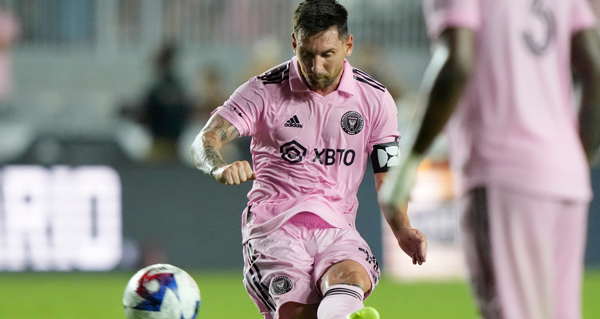
It was a combination ingrained in supporters and rivals over the past 13 years. With Inter Miami holding onto a 2-1 lead versus the Vancouver Whitecaps in injury time of the 2025 MLS Final, Jordi Alba’s final pass of his career was a long ball to Lionel Messi, who took it off his chest to play a through ball to Tadeo Allende to seal the title. The duo played over 400 games together between Barcelona and Miami, with Alba assisting on some 30-35 of Messi’s goals. When Alba announced that he would retire after this season, Messi wondered who would give him return passes. The nostalgic sequence was a culmination of two years of work since Messi first made his debut in MLS.
The weekend in general was supposed to be a crescendo for American soccer, starting with the World Cup draw on Friday. But news of Netflix buying Warner Brothers broke earlier in the day, layering the cultural conversation with existential anxiety. So in addition to analyzing how the USMNT would match up against Australia and Paraguay, we also wondered if the deal signaled the end of the cinema-going experience. Would Netflix continue to prioritize putting movies on streaming and ignore theaters? Would HBO still be HBO?
Regardless, Messi’s storyline continued the following week as he made history as the league’s first back-to-back MVP. Thus, a question: if Messi finishes with 29 goals and 19 assists in a season inside the walled garden of Apple TV, who was there to witness it?
There were signs of trouble with Apple TV and MLS agreeing to shorten their original ten-year, $2.5 billion streaming contract by three years. Apple also reportedly capped the number of Inter Miami matches it gave to Fox as a push to make the league more accessible, thereby sidelining its top lead generator. The eventual goal was to build up enough momentum for MLS to have its own Caitlin Clark moment with the wider audience.
“We had 30 games on ESPN, 30 games on Fox, and 30 games on Univision … nobody was watching them, nobody was getting paid,” said Garber about his reasoning for the deal with Apple TV.
Though Clark’s highest rated game of her college career drew 14.2 million viewers on ESPN. And while MLS matches were scattered between ESPN, Fox, and Univision, they were all available at sports bars and home television screens. Apple TV did remove the friction and confusion with every match in one place. But there is an apocryphal quote about how first time founders focus on product, and experienced founders focus on distribution.
For its part, MLS made it known that viewership did increase by 23% during Messi’s run in the playoffs. It is much more difficult to measure an increase or decrease in cultural impact, water cooler conversations, and moments that may have happened without larger, fragmented distribution. .
We mediated our relationship and created myths with Messi’s Barcelona through television over the last decade. And what better television foe to have than Real Madrid? The club rivalries and duels with Cristiano Ronaldo were a real life soap opera, complete with villains and side characters who added their own wattage in Pep Guardiola and Jose Mourinho. Storylines developed week by week. The four El Clasicos in 18 days in 2011 transcended sport and became a paranoid thriller complete with conspiratorial accusations, red cards, and press conferences ripe with double meanings.
It was a time when we still experienced moments together in one timeline. And whether tiki taka or counter attacking, Sergio Ramos or Carles Puyol, even when we weren’t discussing Messi in the 2010s, it all somehow circled back to him.
Messi turned his focus to his Inter Miami legacy after signing a three-year extension earlier this fall. He’s already driven one tangible milestone before the 2025 season began in raising the side’s Forbes valuation from $585 million to over $1.2 billion in two years, just below LAFC as the No. 16 most valuable club in the world. The stability of a league without promotion and relegation is a large factor in both clubs’ valuations. But in rankings measuring perceived value, the elevated brand association with Apple pays off at the expense of larger distribution.
Messi reportedly had an epiphany over the summer that MLS clubs needed more competitive exposure versus the top teams across the world to raise the quality. At the very least, the partnership with Apple TV gave rise to a tech and sports crossover we never expected. Both Messi and Apple exec Eddie Cue were in agreement on how the league could improve. Messi suggested that MLS teams should be able to sign players without restrictions or budgets, saying how then “many more important players would come and help the growth of the United States.”
“I’m like, sign some more players,” echoed Cue.
When we think about Barcelona’s golden age, does a television logo or tech platform come to mind? We might have been naive as the combination of proprietary data and content working hand-in-hand to create customer profiles would lead to an inevitable conclusion. MLS would have to sign more global superstars in a post-Messi world, not just to sell jerseys or raise the quality of the league, but also to decrease churn. When it comes to subscribers, Messi’s future is given the same consideration as another season of Severance in terms of retention. It might have always been, but it’s more pronounced now, that MLS is just another season of a television series.
—
Messi’s retirement would signal more than just the end of a soccer era, but also the end of a certain type of linear television experience that created generational rivalries and allegiances to clubs and superstars.
In addition to Alba, the MLS Final also was the final game for Busquets. Appropriately, Busquets took the final touch of the match. Coming of age with that Barcelona core last decade through a hodgepodge of channels including beIN Sports, GolTV, and Fox Soccer, the journey ended on the Apple TV, a clear signal of a changing time. If the medium is the message, this next age of streaming will develop its own type of stars and discussions. Maybe in addition to goals and assists, maybe we’ll also factor whether we’d pay $9.99 to keep a subscription if they played on that service. Not only is everything becoming television, everything is becoming a closed ecosystem, experienced at different times if at all. The next Messi could already be here, he just wouldn’t be evenly distributed.